
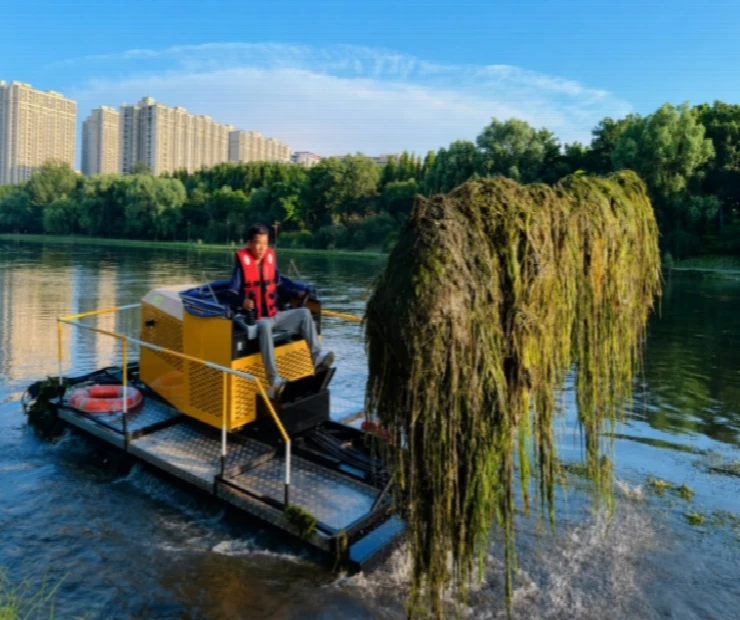
Amphibious Aquatic Weed Harvester
Explore Wanrun's wr-AWD45 amphibious aquatic weed harvester for lakes, ponds and canals. Review reference specifications and request a proposal.
- CE & EPA Certified
- 18-Month Warranty
- Global Parts Warehouses
Amphibious Aquatic Weed Harvester
wr-AWD45 | Track-and-Propeller Dual Drive for Aquatic Vegetation Cutting and Collection
The wr-AWD45 amphibious aquatic weed harvester from Shandong Wanrun Intelligent Equipment Co., Ltd. combines a nylon crawler undercarriage with a water propeller, so one machine can travel over land, banks and shallow water and move into open water without crane lifting. A hydraulically driven T-shaped cutter bar cuts submerged and emergent vegetation at depths of up to 1 m, while a front collection rack, adjustable from 2 to 4 m wide, gathers the cut material for onshore disposal. Site assessment applies to all duty figures.
Reference configuration only. Specifications below describe the listed equipment configuration from the customer-supplied configuration sheet and operating manual, not guaranteed site performance. Final equipment selection and operating conditions must be agreed in the project technical specification.
Match the Machine to Your Waterway-Clearing Task
- Seamless amphibious travel: nylon crawler tracks handle land, bank and shallow-water movement; the propeller provides fast open-water transit. No crane or trailer is needed to cross between connected water and shore areas.
- Shallow draft, no blind spots: a listed draft of 0.2–0.3 m with 360° turning supports work along shallow margins, reed edges and confined water bodies where deeper-hulled boats cannot operate.
- Single-operator workflow: electronically controlled proportional load-sensing hydraulics with push-button controls let one operator manage travel, cutting, collection and unloading.
- Interchangeable attachments: the T-shaped cutter bar (2 × 1.5 m) and the 2–4 m collection rack are each driven by one hydraulic motor and are changed on site with the machine stopped and de-energised. The source sheet also lists handling of floating debris and soft underwater silt; material suitability requires per-site confirmation.
- Built for long service: 5083 aluminium-alloy pontoons, a Kubota diesel engine and a listed fuel consumption of 2–4 L/h support extended duty. Mechanical cutting and on-board collection add no chemicals to the waterbody.
Understand How the Amphibious Harvester Works
Two drive systems cover two environments. The 200 cc travel motors turn the nylon crawler tracks for land and shallow operation, while a propeller takes over in open water. One Kubota V1505T diesel engine (32.5 kW) drives the Casappa main hydraulic pump; the resulting hydraulic power also runs the cutter bar and collection rack. The operating manual lists engine speeds of 1,600–2,000 rpm for land mode and 1,800–2,100 rpm for water mode, with the propeller raised before steep slopes.
This is a mechanical cutting-and-collection machine, not a herbicide application or mulching arrangement. Cut material is gathered on board rather than left in the water, which matters where removed vegetation must be disposed of on shore. The crawler undercarriage extends working range to shallow edges and land transfer points, but it is not a claim of suitability for rock, stumps, woody reed stands or hard debris layers — vegetation type, density and bottom conditions should be assessed before equipment selection.
Review the Reference Specifications
|
Parameter |
Reference value |
|
Model |
wr-AWD45 |
|
Equipment type |
Amphibious aquatic weed harvester, track-and-propeller dual drive |
|
Overall dimensions |
4.5 × 2.0 m (L × W) |
|
Chassis pontoon material |
5083 aluminium alloy |
|
Draft, as listed |
0.2–0.3 m |
|
Diesel engine |
Kubota V1505T |
|
Engine power |
32.5 kW |
|
Fuel consumption, as listed |
2–4 L/h |
|
Fuel tank capacity |
50 L |
Performance qualification: the 1 m cutting depth is a manual-stated maximum set by boom geometry, not a continuous duty figure, and the fuel-consumption range depends on load. The reference sheet does not publish a verified area-based productivity (e.g. hectares per hour), and none is added here. Confirm achievable performance against vegetation type and density, water depth, bottom conditions and shore-access layout.
Check Whether This Configuration Fits Your Site
Consider the wr-AWD45 for aquatic vegetation-management projects on lakes, ponds, reservoirs, canals and slow-flowing rivers, where the target material can be mechanically cut and collected. Working in reed edges or floating-debris zones requires a vegetation and bottom survey rather than selection by waterbody type alone. Send vegetation species and density, water depth and required cutting depth, collection width, unloading and disposal locations, and shore-access or bank-transfer conditions for a project-specific assessment.
Frequently Asked Questions
What vegetation can the wr-AWD45 cut and collect?
Submerged and emergent aquatic plants are the main assessment targets. Do not assume mechanical cutting of woody stems, compacted reed beds or rock- or debris-rich deposits without further engineering review.
What does "amphibious" mean in practice?
The machine travels on nylon crawler tracks over land, banks and shallows, and switches to propeller drive in open water, without lifting equipment between connected working areas. Attachment changes and mode switching are performed with the machine stopped and de-energised, as the operating manual requires.
Can it work in very shallow or confined water?
A listed draft of 0.2–0.3 m with 360° turning is aimed at shallow margins and small water bodies. Submerged obstacles, steep banks and soft bottoms still need site checks before mobilisation.
Is the machine diesel-powered or electric?
The reference configuration uses a Kubota V1505T diesel engine (32.5 kW) with electric start and a 12 V system. Any alternative drive arrangement requires a separate technical specification.
What maintenance does the reference sheet specify?
Engine oil: CF-grade 15W-40 diesel oil, 6 L per fill, first change after 50–100 running hours, then routine service every 500 hours. Hydraulic system: AW46 anti-wear hydraulic oil, 50 L initial fill, first change at 300 hours, then every 1,000 hours. Grease all bearings and moving joints after each shore landing, and maintain antifreeze level with the same type of coolant only.
What spare parts are supplied with the machine?
The packing list includes fasteners (M8/M10/M12), a tool kit with an adjustable wrench and 17/19/22/27/34 mm wrenches, a diesel-engine three-filter set, moving/fixed cutter-blade assemblies, a grease gun with two grease packs, propeller blades, two spare 200 cc travel motors and four 12A drive chains. A one-year wear-parts list (cutter blades, hydraulic and engine filters, chains, seals, ignition parts, track pads, etc.) is supplied for planned purchasing.
What should I send when requesting a weed-control proposal?
Provide vegetation species, density and coverage; water depth and required cutting depth; collection width and disposal point; total working area and schedule; bank and shore-access conditions for land transfer; and project location.
Request a Weed-Control Proposal
Discuss your amphibious aquatic weed harvester requirements with Shandong Wanrun Intelligent Equipment Co., Ltd. Send the site information above to request a configuration review and project-specific quotation.
Request a Weed-Control Proposal
Technical background sources
These references support general aquatic-plant-management terminology only. They do not verify this model’s specifications, performance, certifications or delivery history. The pages do not state publication dates; they were accessed on 11 November 2026 and are not presented as recent market evidence.
- S. Army Corps of Engineers — Invasive Species Management: https://www.usace.army.mil/Missions/Environmental/Invasive-Species-Management/ — federal aquatic plant and invasive species management programmes.
- Aquatic Plant Management Society, Best Management Practices, Ch. 3.1 — A Manager’s Definition of Aquatic Plant Control: https://aquatics.org/bmpchapters/3.1%20A%20Manager%E2%80%99s%20Definition%20of%20Aquatic%20Plant%20Control.pdf — definition and scope of aquatic plant control techniques.
- USACE EM 1110-2-3600 — Management of Water Control Systems: https://www.publications.usace.army.mil/portals/76/publications/engineermanuals/em_1110-2-3600.pdf — vegetation and aquatic-plant management within water control systems.
Product-specific values are transcribed from the customer-supplied Chinese configuration sheet, packing list and operating manual for the wr-AWD45, not from independent testing. Manufacturer attribution is supplied by the customer. The configuration sheet lists 5083 aluminium-alloy pontoons; the source document contains no price, certification, delivery case, service commitment or measured efficiency figure, and none has been added.
Waterway & Port Maintenance
Channel, berth and basin dredging
Sand & Aggregate Mining
River, lake and nearshore sand extraction
Land Reclamation
Hydraulic fill for coastal and site works
Aquatic Plant & River Cleanup
Water hyacinth, reed and debris harvesting
Related Products
More proven machines from the WanRun mining & construction lineup
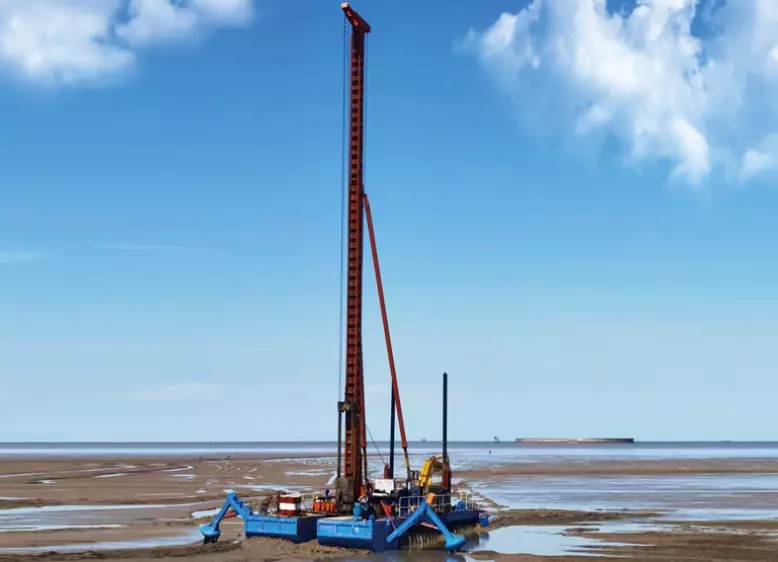
Mudland Spiral Piling Platform
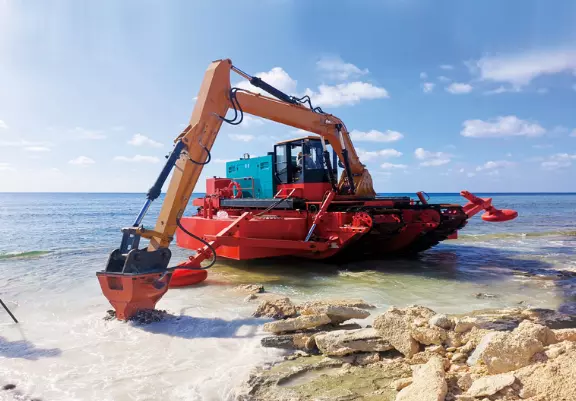
Amphibious Excavator
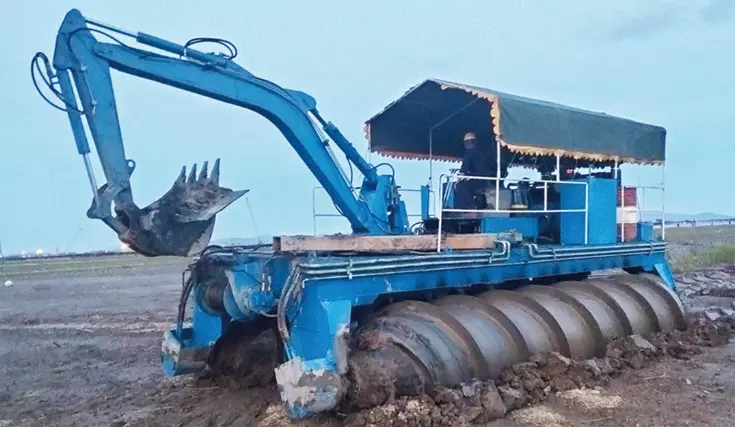
Spiral Propulsion Machine
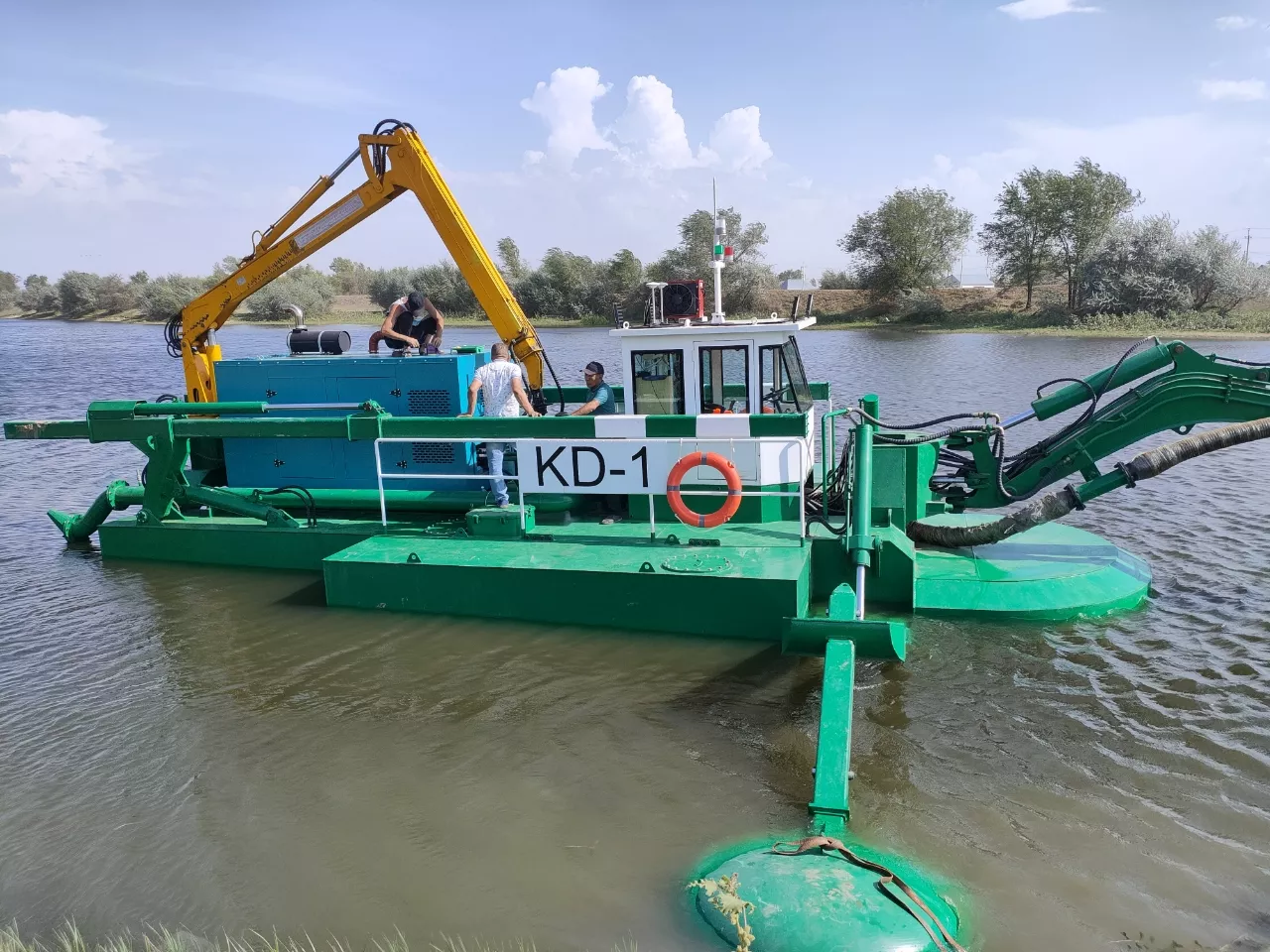
Multi-Function Amphibious Dredger
Need the Full Spec Sheet & Price List?
Our export engineers reply within 24 hours with quotations, shipping options and parts support.