
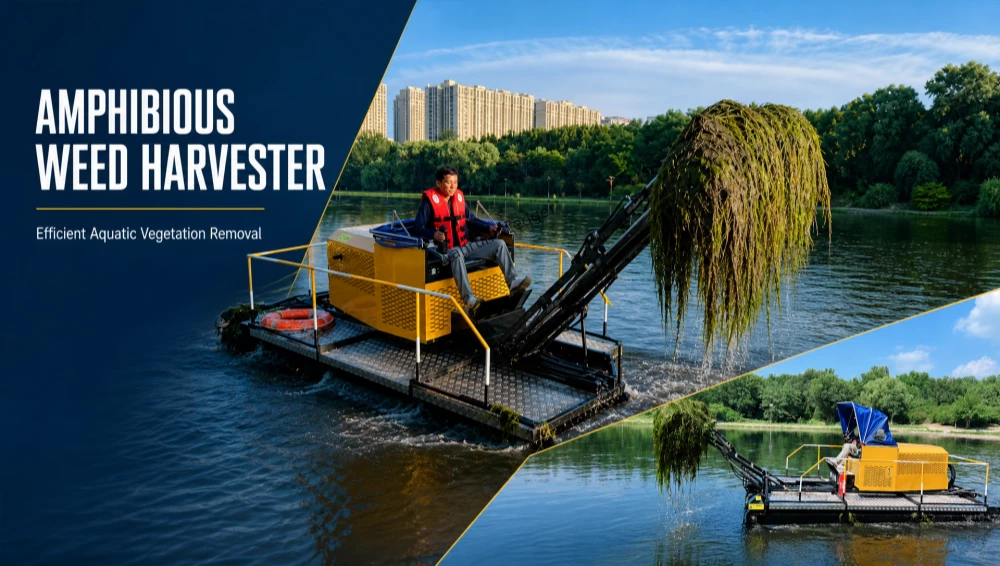
Tracked Aluminum Amphibious Weed Harvester Boat
A tracked aluminum amphibious weed harvester for cutting, collecting, raking and removing aquatic vegetation in shallow water, wetlands and shoreline areas.
- CE & EPA Certified
- 18-Month Warranty
- Global Parts Warehouses
Tracked Aluminum Amphibious Weed Harvester Boat
Cut, collect and clear aquatic vegetation from water, wetlands and shorelines with one machine
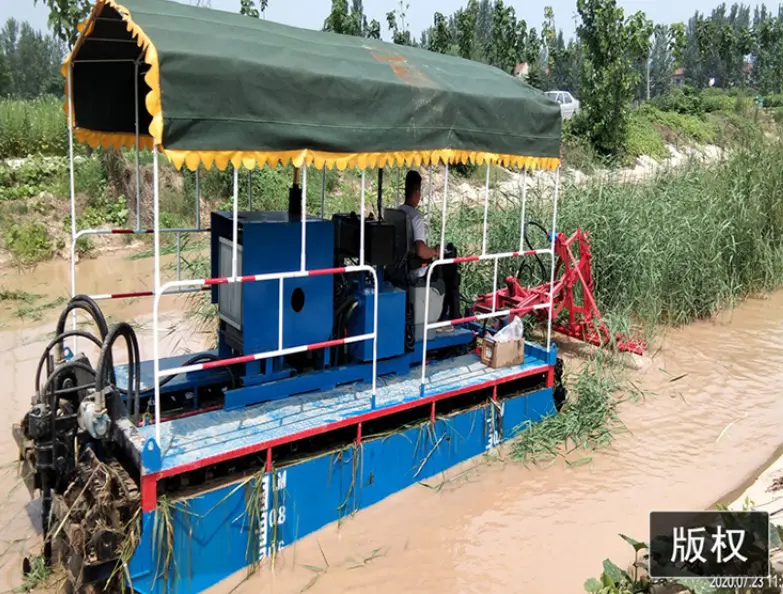
The Tracked Aluminum Amphibious Weed Harvester is a compact, multipurpose work boat designed for aquatic vegetation control, floating-debris collection and light shoreline maintenance. Its dual mobility system combines wide nylon tracks for land and soft-ground travel with two retractable propellers for water propulsion. This allows the machine to move between shore and water without routine crane lifting under suitable site conditions.
A 5083 aluminum-alloy pontoon chassis, hydraulic front working arm and interchangeable attachments make the machine suitable for shallow lakes, ponds, canals, wetlands, reservoirs and other areas where conventional boats or land machinery have limited access. One trained operator can control travel, steering and attachment functions through the CAN-bus electro-hydraulic control system.
Request a configuration recommendation: Send us your working-water depth, vegetation type, shoreline condition and required attachments. We will help match the machine setup to your project.
Key Features
Move continuously between land and water
The wide-track undercarriage supports travel on land, soft banks and wet ground, while two liftable propellers provide water propulsion. This amphibious design reduces dependence on lifting equipment when the launch area and slope are suitable for safe machine access.
Work in shallow and confined areas
With a typical draft of approximately 0.2–0.3 m and 360-degree maneuvering capability, the machine can work close to shore and in shallow-water zones that may be difficult for conventional harvesting boats to reach.
Cut vegetation down to 1 m below the surface
The hydraulic boom and forearm allow the operator to adjust the cutter position. The maximum stated cutting depth is 1 m, enabling control of aquatic plants both at and below the water surface.
Change attachments for different jobs
The front working system accepts interchangeable attachments for cutting, raking, digging and pushing or collecting vegetation. This helps one carrier perform multiple maintenance tasks across changing site conditions.
Operate with one trained person
Travel and working functions use electronic and hydraulic controls. The layout is designed for single-operator use, helping reduce labor requirements during routine aquatic vegetation management.
Track location and working routes
The integrated GPS system supports real-time positioning and route-history queries, helping supervisors review machine movement during field operations.
Support low-light operation
Dual front LED work lights improve visibility during early-morning, evening or low-light maintenance work.
Typical Applications
- Aquatic weed cutting in lakes, ponds, canals and reservoirs
- Vegetation removal from shallow water and shoreline zones
- Wetland and marsh maintenance
- Floating vegetation and light floating-debris collection
- Raking and gathering cut plants
- Light underwater-silt or bank-maintenance work with a suitable bucket
- Municipal waterway maintenance
- Golf-course, park and landscape-water management
- Fishpond and aquaculture-water maintenance
- Flood-control channel and drainage-area vegetation management
Technical Specifications
|
Item |
Specification |
|
Product type |
Tracked aluminum amphibious weed harvester boat |
|
Overall dimensions |
4,700 × 2,060 × 1,800 mm |
|
Chassis pontoon material |
5083 aluminum alloy |
|
Engine |
Kubota V1505T diesel engine |
|
Rated power |
32.5 kW |
|
Rated engine speed |
3,000 rpm |
|
Starting system |
Electric start |
|
Stated fuel consumption |
2–4 L/h, depending on operating load and conditions |
|
Diesel tank capacity |
50 L |
|
Hydraulic oil tank capacity |
50 L |
|
Track type |
Wide nylon track |
|
Track width |
528 mm |
|
Number of tracks |
2 |
|
Water propulsion |
2 retractable propellers |
|
Propeller diameter |
210 mm |
|
Travel motors |
2 |
|
Propeller motors |
2 |
|
Hydraulic pump |
CASAPPA MVP60.76D variable-displacement piston pump |
|
Control system |
CAN-bus electro-hydraulic control system |
|
Front support arm |
1.5 m, liftable, four-cylinder configuration |
|
Typical draft |
0.2–0.3 m |
|
Maximum stated cutting depth |
1 m |
|
Steering |
360-degree maneuvering |
|
GPS |
Real-time positioning and route-history query |
|
Lighting |
Dual front LED work lights |
|
Electrical system |
12 V / 45 A battery system |
Specifications may vary with the selected attachments and final configuration. Confirm the technical sheet before ordering.
Available Attachments
T-Shaped Hydraulic Cutter
- Approximate dimensions: 2.0 × 1.5 m
- Driven by one hydraulic motor
- Designed for cutting aquatic vegetation
- Cutting depth adjusted through the hydraulic boom and forearm
Folding Grass-Collection Rake/Basket
- Adjustable working span: 2–4 m
- Approximate structural width: 0.7 m
- Designed to gather and move cut vegetation or floating material
Excavator Bucket
- Intended for suitable light digging, sediment-handling and shoreline-maintenance tasks
- Final bucket size and working suitability should be selected according to site conditions
Grass-Pushing Fork
- Intended for pushing, consolidating and transferring gathered vegetation
- Useful for moving cut material toward a collection or unloading point
Attachment availability and combination depend on the ordered configuration. Shut down the engine, isolate the power and secure the attachment pins before changing any attachment.
How the Amphibious System Works
On land and soft ground
Two wide nylon tracks distribute the machine load and provide controlled travel across suitable shorelines, wet ground and work areas. Before climbing or descending a slope, the operator must raise the propellers and adjust the seat position as instructed in the operation manual.
In water
The operator switches to propeller travel and lowers the twin propellers to the working position. During water operation, propulsion and track settings should be adjusted to the actual water-surface and load conditions.
During cutting and collection
The operator positions the front arm, starts the selected hydraulic attachment and adjusts working speed according to vegetation density. Cut material can then be gathered or pushed using the appropriate collection attachment.
Why Choose an Aluminum Amphibious Weed Harvester?
Reduce launch and transfer steps
A machine that can travel on tracks and propel itself in water can reduce repeated handling between shoreline and water, subject to safe access conditions.
Reach areas conventional boats may miss
Shallow draft, track mobility and compact dimensions support work near banks, in wetlands and in other restricted-access locations.
Use one carrier for multiple maintenance tasks
Interchangeable cutting, raking, digging and pushing attachments allow the base machine to adapt to seasonal and project-specific requirements.
Simplify daily operation
Electro-hydraulic controls, electric starting, GPS tracking and front LED lighting support practical field operation by one trained operator.
Support corrosion-conscious construction
The 5083 aluminum-alloy pontoon chassis is selected for marine and water-working environments. Routine cleaning, inspection, lubrication and correct maintenance remain essential for long service life.
Operation and Maintenance Highlights
Before starting
- Check all fasteners for looseness or missing parts.
- Confirm sufficient diesel fuel for the planned work.
- Inspect hydraulic hoses and pipelines for leakage, seepage, damage or aging.
- Remove obstacles and confirm that the travel and work area is safe.
Recommended operating range
- Land working engine speed: 1,600–2,000 rpm
- Water working engine speed: 1,800–2,100 rpm
- Always adjust attachment speed to vegetation density and actual load
Maintenance schedule from the supplied operation manual
|
Service item |
Recommended interval or requirement |
|
First engine-oil service |
After the first 50–100 operating hours |
|
Engine oil |
CF-grade 15W-40 diesel engine oil |
|
Engine-oil fill quantity |
6 L per change |
|
Diesel filter |
Replace during the first engine service |
|
Routine engine service |
Every 500 operating hours after the initial service |
|
Hydraulic oil |
No. 46 anti-wear hydraulic oil |
|
First hydraulic-oil replacement |
After 300 operating hours |
|
Later hydraulic-oil replacement |
Every 1,000 operating hours |
|
Greasing |
Grease bearings and moving joints after each return to shore |
|
Coolant |
Maintain the correct level and do not mix incompatible antifreeze types |
Always follow the final machine-specific manual and the engine manufacturer’s service requirements.
Frequently Asked Questions
What is a tracked amphibious weed harvester?
A tracked amphibious weed harvester is a work machine that can travel on suitable land or soft ground using tracks and move through water using propellers. It carries hydraulic attachments for cutting, gathering and removing aquatic vegetation.
Can the machine enter the water without a crane?
Under suitable bank, ground and slope conditions, the tracked amphibious design allows the machine to travel between land and water without routine crane lifting. A site-specific safety assessment is required before launch or recovery.
How shallow can the machine work?
The supplied technical data states a typical draft of approximately 0.2–0.3 m. Actual draft and access depend on load, attachment, water conditions and ground bearing capacity.
How deep can it cut aquatic weeds?
The maximum stated cutting depth is 1 m. The operator adjusts the cutter depth through the hydraulic boom and forearm.
Which jobs can the attachments perform?
Available attachment types include a hydraulic aquatic-weed cutter, folding collection rake or basket, excavator bucket and grass-pushing fork. They support cutting, gathering, pushing and suitable light digging or sediment-handling work.
How many operators are required?
The machine is designed for operation by one trained person. Site safety, transport, maintenance and material-handling requirements may require additional personnel.
Can the attachment be changed on site?
Yes. The machine must first be stopped and powered down. The old attachment is removed, the replacement is aligned and connected, and the fixing pins are inserted and locked before restarting.
What information is needed to select a configuration?
Provide the water depth, vegetation type and density, shoreline slope, ground condition, access width, expected working hours and required tasks. Photos or videos of the site are helpful for configuration review.
Request a Project-Specific Configuration
Tell us:
- Country and project location
- Water-body type and approximate working area
- Water depth and shoreline conditions
- Main vegetation or material to be removed
- Required tasks: cutting, raking, collecting, digging or pushing
- Preferred attachments
- Any transport-size or access restrictions
Contact us for a technical recommendation, attachment plan and project-specific specification sheet.
Waterway & Port Maintenance
Channel, berth and basin dredging
Sand & Aggregate Mining
River, lake and nearshore sand extraction
Land Reclamation
Hydraulic fill for coastal and site works
Aquatic Plant & River Cleanup
Water hyacinth, reed and debris harvesting
Related Products
More proven machines from the WanRun mining & construction lineup
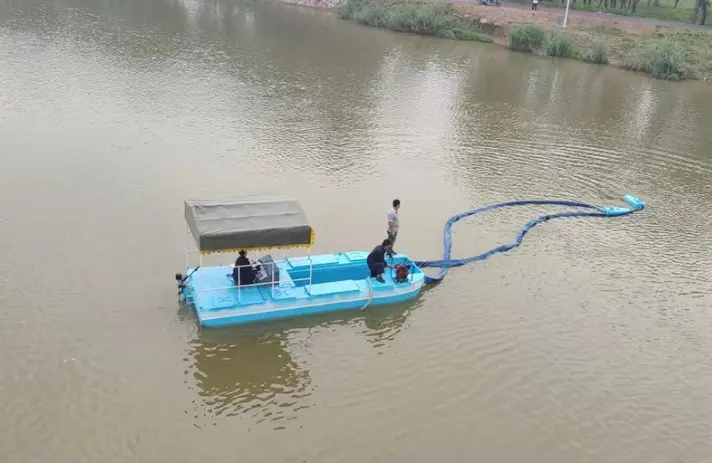
Floating Debris Long-Arm Recovery Boat
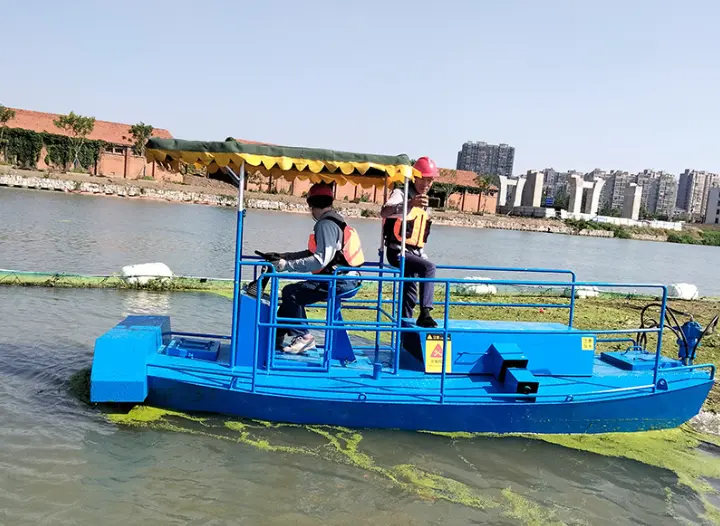
Floating Water Lily Harvesting Boat
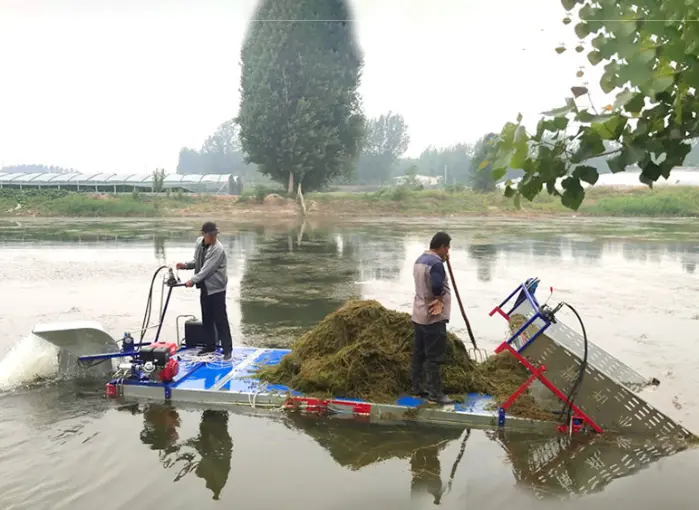
Flat Hydraulic Salvage Boat
Amphibious Reed Harvesting Ship
Need the Full Spec Sheet & Price List?
Our export engineers reply within 24 hours with quotations, shipping options and parts support.