
WR-JSD400 Jet Suction Dredger for a Russia Sand Dredging Project
A jet suction dredger is designed to recover sand and sediment by combining a high-capacity dredge pump with jet-water assistance at the suction head. For a sand dredging project in Russia, the wr-JSD400 was configured as a straight-pipe jet suction dredger for high-volume slurry handling, controlled dredging depth, and pipeline discharge operations.
This project configuration centers on a 2,500 m³/h water-flow dredging system with a 500 m³/h solids capacity. Its 25 m straight suction pipe and 450 mm suction diameter support work where direct access to the dredging area and stable suction handling are required.
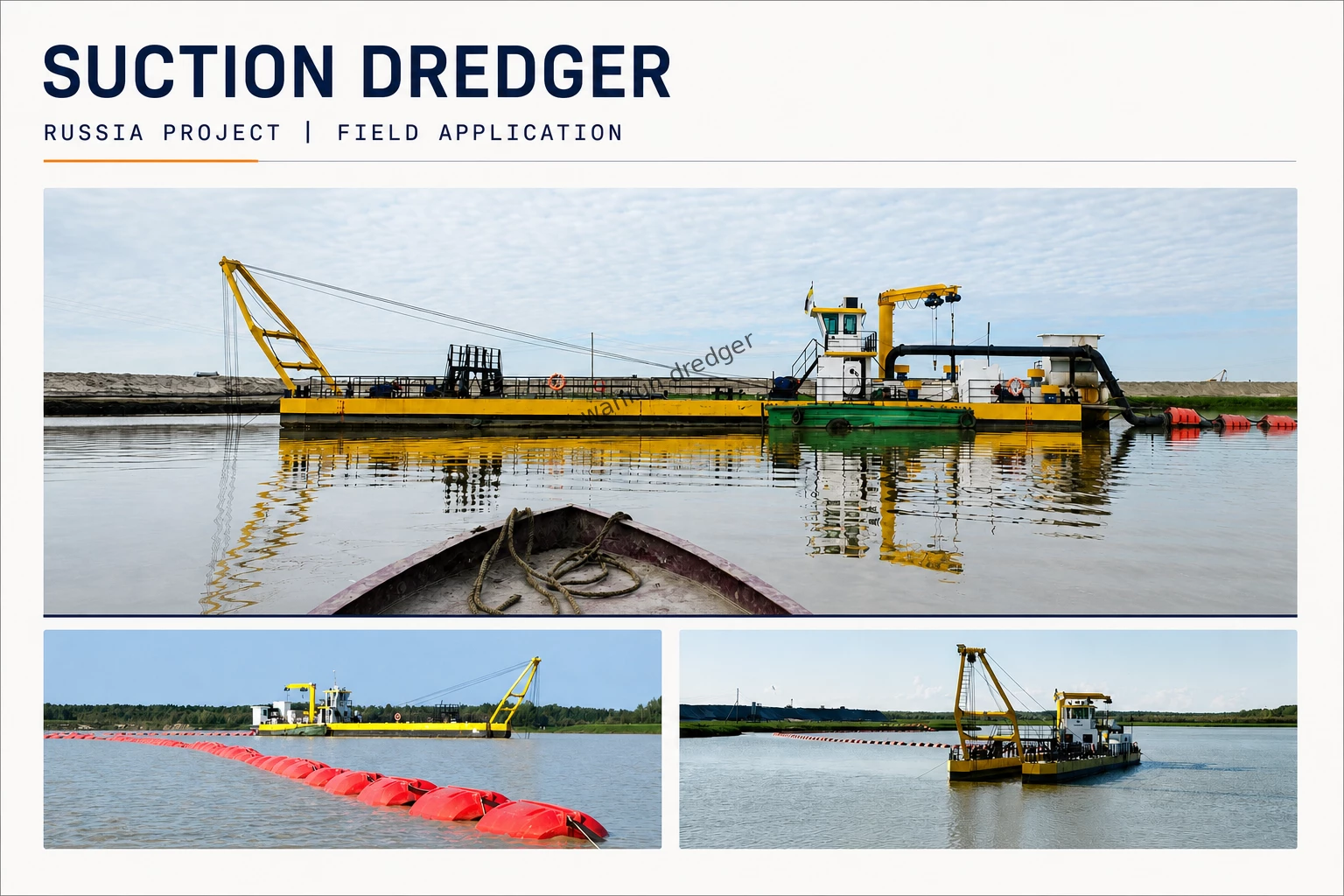
Project Equipment Overview
|
Item |
Project Configuration |
|
Equipment type |
Straight-pipe jet suction dredger |
|
Model |
wr-JSD400 |
|
Water flow |
2,500 m³/h |
|
Solids capacity |
500 m³/h |
|
Dredging depth |
Up to 18 m |
|
Discharge distance |
Up to 1,000 m |
|
Discharge height |
Up to 5 m |
|
Pontoon overall size |
25 m × 7.1 m × 2.26 m |
|
Full equipment size |
36 m × 7.1 m × 3.5 m, with the suction pipe in a horizontal position |
|
Draft |
1 m |
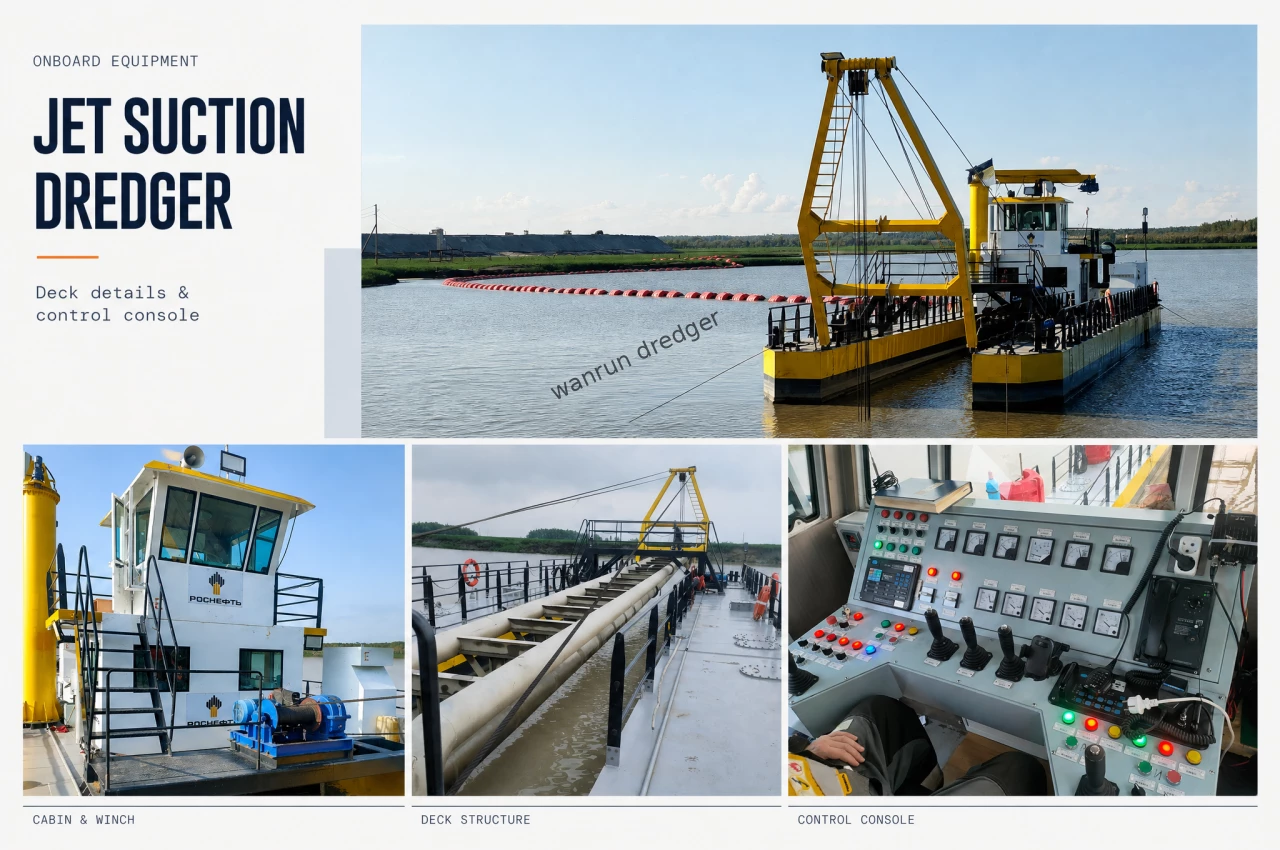
Dredging System Designed for Sand Handling
At the center of this jet suction dredger is a 350WN dredge pump configured with a 2,500 m³/h water-flow rating and 50 m head. The pump uses a Cr27 impeller and is specified for particles up to 150 mm. A 450 mm suction pipe and 400 mm discharge pipe form the main slurry transport path.
The straight suction assembly includes a 25 m suction pipe, with a 450 mm (18 inch) suction-pipe diameter and a 300 mm (12 inch) jet-water-pipe diameter. This arrangement helps direct jet water toward the intake area while the dredge pump transports the slurry through the discharge line.
Power and Jet-Water Configuration
The documented project configuration includes a diesel-powered main drive and auxiliary drive. The main engine is specified as a Weichai 8170 diesel engine rated at 735 kW and 1,500 r/min, while the auxiliary engine is specified at 205 kW and 1,500 r/min. The complete installed-power figure is 940 kW.
The jet-water system uses a 300-250-400C water jet pump, rated at 1,000 m³/h flow, 33 m head, and 132 kW power. This pump supports the jet suction process at the suction head.
Note: The original project documentation states that the final choice between diesel and electric propulsion could be adjusted before equipment finalization. Power configuration should therefore be confirmed according to local power availability, operating conditions, and project requirements.
Pontoon and Structural Configuration
The dredger uses a modular pontoon arrangement with a 25 m × 7.1 m × 2.26 m overall pontoon dimension. The main pontoon is 11.5 m × 3.5 m × 2.26 m, with 23 m × 1.8 m × 1.26 m side pontoons.
Marine steel construction is specified across the pontoon structure. The main pontoon uses 8 mm bottom plates, 6 mm side plates, and 6 mm deck plates. The side pontoons use 5 mm bottom, side, and deck plates.
For corrosion protection, the configuration includes two layers of marine epoxy zinc-rich primer, two layers of marine chlorinated-rubber finish paint, and anti-corrosion zinc blocks welded to the main pontoons.
Winch, Control, and Safety Equipment
A portal frame with an 8 m height and 200 mm steel pipes supports the suction assembly. The lifting winch is rated at 50 kN pull, 20 m/min rope speed, 18 mm wire rope, and 160 m rope capacity. Four swing winches are included, each with 10 kN pull, 20 m/min rope speed, 14 mm wire rope, and 200 m rope capacity.
The configuration also includes:
- A 10,000 L fuel tank
- A 2 m × 1.5 m × 1.8 m operation room with air conditioning
- Four 70 kg anchors
- Four life jackets, four life buoys, and two dry-powder fire extinguishers
- A sealing pump rated at 10 m³ flow, 51 m head, and 5.5 kW power
Suitable Applications for Jet Suction Sand Dredging Equipment
With a 2,500 m³/h water-flow design and a straight suction-pipe structure, the KD-JSD400 configuration is relevant for sand recovery and sediment-handling projects that require floating dredging equipment and pipeline discharge. Final equipment selection should be based on material characteristics, dredging depth, discharge route, local regulations, and site conditions.
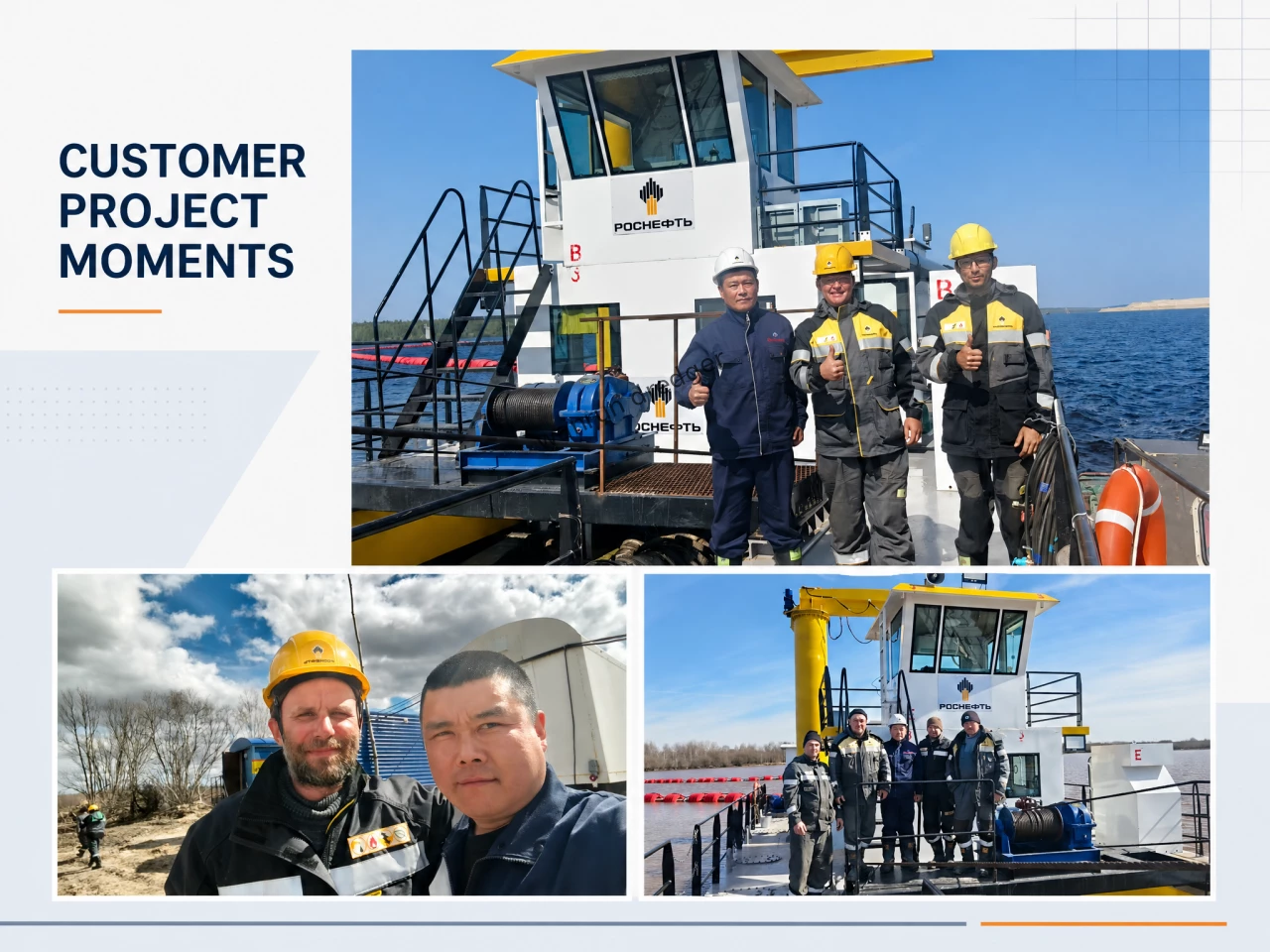
Discuss Your Dredging Project Requirements
Every river, lake, reservoir, or sand dredging site has different material, depth, discharge, and power requirements. Share your target capacity, working depth, discharge distance, material size, and preferred power source to discuss a suitable jet suction dredger configuration.